
Here is the short answer first.
Five shapes work on an oval face. Rectangular, round, aviator, cat-eye and geometric.
Three usually don't. Frames that are too big, frames narrower than your face, and frames that are very deep.
One thing matters more than the shape. Frame width. The frame should be about as wide as your cheekbones. Get the width wrong and the right shape still looks wrong. That is why people buy a frame they picked carefully and then never really like it.
The rest of this page explains why, and how to check each point in a mirror.
First, are you actually oval?
Worth a check. Many people think they have a round face when they have an oval one. They then avoid frames that would have suited them.
An oval face is about one and a half times longer than it is wide. The forehead is a little wider than the jaw. The chin is rounded, not pointed. The cheekbones are the widest part. There are no sharp angles.
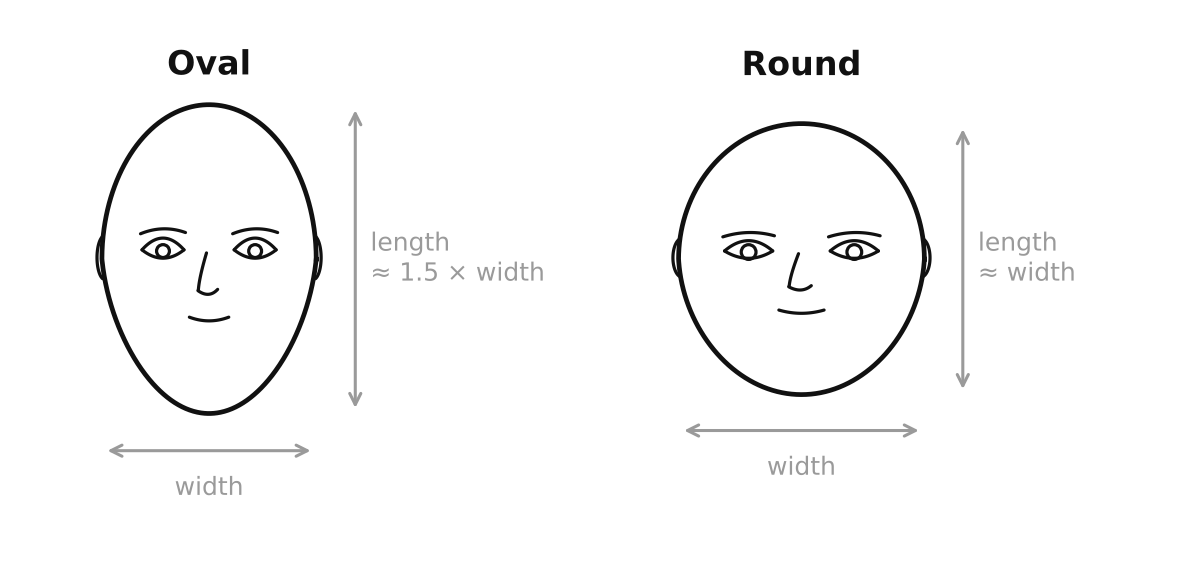
If you are not sure, measure instead of guessing. Take a photo straight on. Compare the width across your cheekbones with the length from your hairline to your chin. A round face comes out close to equal. An oval face is clearly longer.
The five that work
An oval face does not need fixing. That is why the list is this long. Most face shapes are trying to balance something out. Yours is not. So the question is what you like, not what you are allowed to wear.
Rectangular
The safe one. It adds a bit of shape without changing anything. If you want glasses nobody comments on, start here and stop here.
Round
Oval faces can wear round frames. Round faces cannot. There is enough length in your face to carry a circle without the whole thing looking wider.
Thin metal keeps it quiet. Thick plastic makes it a statement. Both are fine.
Aviator
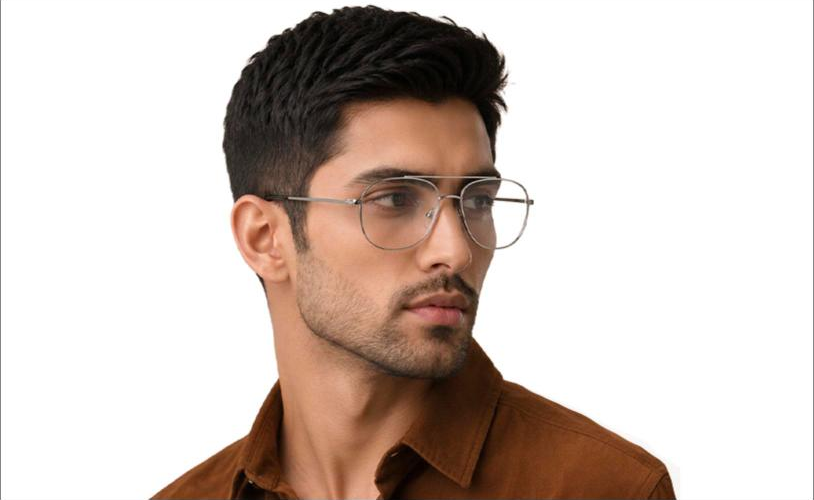
The teardrop shape follows the line of an oval face almost exactly. That is probably why the shape has lasted since the 1930s. It works as everyday glasses, not only as sunglasses.
Cat-eye
Cat-eye frames lift the outer corners. On most faces that lift is doing a job. On an oval face it is not fixing anything, so you can go as quiet or as bold as you want.
Geometric
Hexagons and other angular frames came back a few years ago and have stayed. They sit well on an oval face because the face has no angles of its own to clash with.
The three to skip
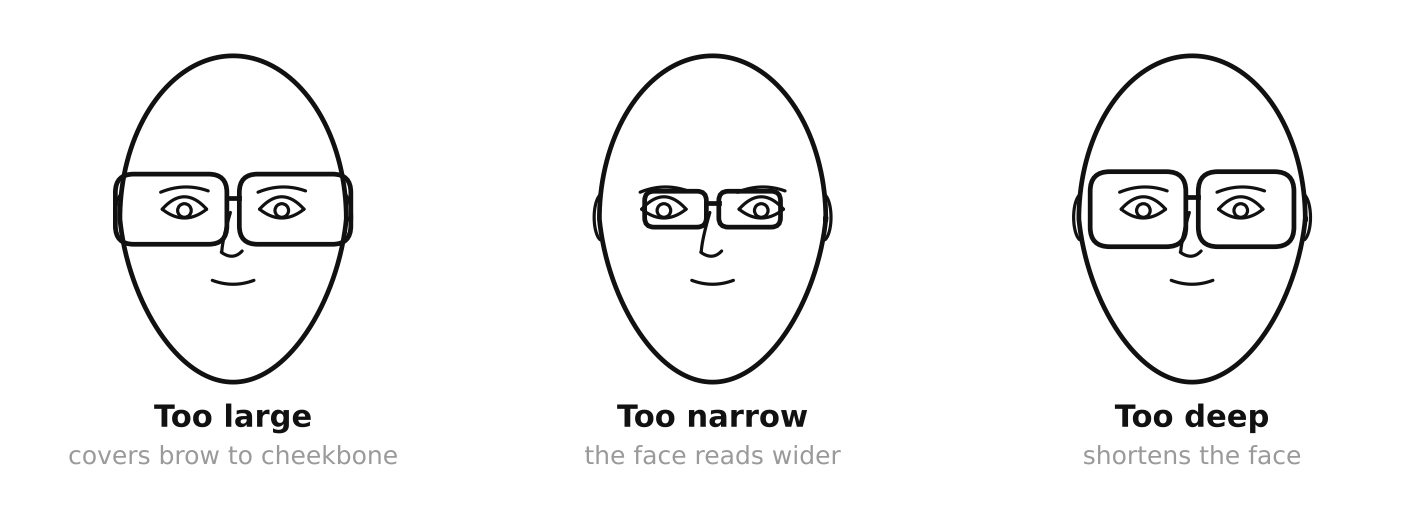
- Frames that are too big. If the frame runs from your eyebrow to your cheekbone, it covers the proportions you already have.
- Frames narrower than your face. Your face then looks wider next to them. This is the most common mistake and the hardest one to spot in a mirror.
- Very deep frames, meaning tall from the top rim to the bottom. They make the face look shorter. The length is the part worth keeping.
None of these are rules. Plenty of people wear big frames on an oval face and look great. If that is the look you want, go and get it. But if a pair feels slightly wrong and you cannot say why, it is usually one of these three.
The measurement that actually decides it
Shape gets all the attention online. Fit decides whether you wear the glasses or leave them in a drawer.
Swipe the table sideways to see every column.
| What to check | What you want |
|---|---|
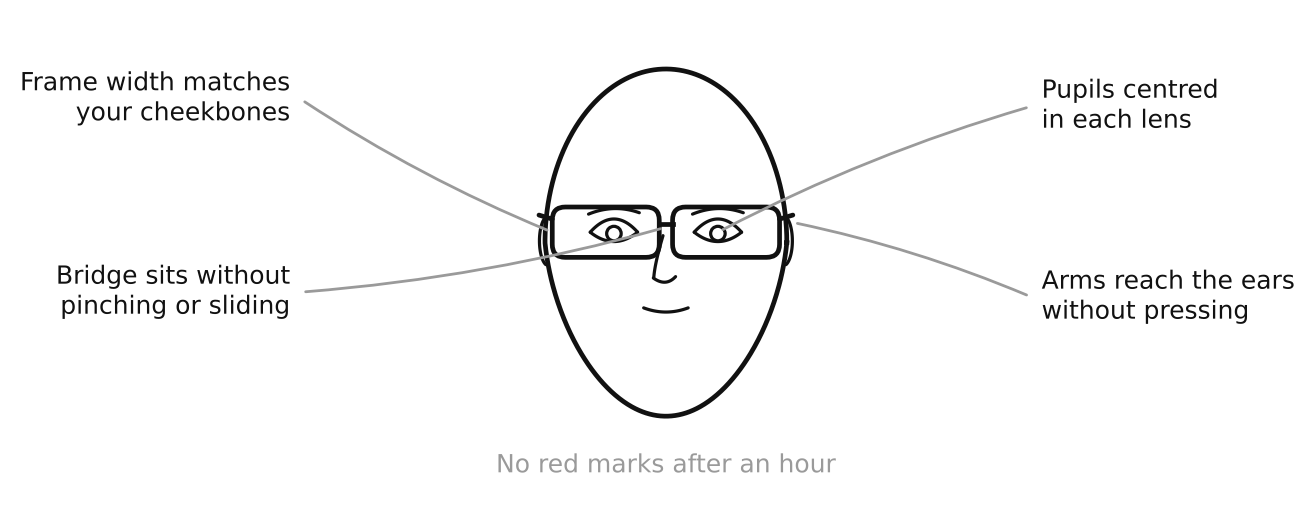
| Frame width | About as wide as your cheekbones |
| Eye position | Your eyes centred in each lens, not high or low |
| Bridge | Sits on your nose without pinching or sliding |
| Arms | Reach your ears without pressing on the sides of your head |
| Weight | No red marks after an hour |
Any one of these being wrong will annoy you more than the wrong shape. A frame that slides down your nose gets pushed back up about forty times a day. After two weeks of that, most people stop wearing it.
Where to get the test done
Frame shape is the part everyone researches. The prescription is the part that decides whether you wear the glasses.
A prescription that is slightly out does not feel like a prescription problem. It feels like a headache at four in the afternoon. Or eyes that give up sooner than they used to. Almost nobody connects that back to the glasses.
Ben Franklin has optical centres inside partner eye hospitals across India. An optometrist tests your eyes in the same building as the eye doctors, using hospital equipment. That matters for the things a quick chart reading will miss. Glaucoma gives no warning at all until sight has already gone. Diabetes can change the back of the eye long before anyone notices a difference in their vision.
For picking a frame, none of that matters. For the eye test it does.
If you are buying for a woman
Cat-eye frames get recommended for oval faces all the time, and the advice is right. The lift works even though your face does not need it.
After that: round frames in thin metal if you want something quiet. Rectangular plastic for work. Big square frames if you want people to notice them. All of it works, which is a nice problem to have.
Colour probably matters more than shape here. Warm tones, tortoiseshell and gold sit well against most Indian skin tones. Very pale frames can wash out against deeper skin, but that depends on the person. Hold two or three up before you decide.
If you are buying for a man
Rectangular and square are the default, and they work. There is no shame in stopping there.
Aviators suit an oval face better than almost any other shape. If you have been curious about them, this is the face to try them on.
Browline frames are heavier along the top edge. They add some weight to the upper half of the face. Worth a try if you want something less plain than a rectangle.
Half-rim and rimless both work too. That is another thing an oval face gets away with and other shapes do not.
Frequently Asked Questions
Which glasses suit an oval face?
Rectangular, round, aviator, cat-eye and geometric all suit it. Oval is the easiest face to fit because nothing needs balancing out. Frame width matters more than frame shape.
What frames should an oval face avoid?
Frames that cover from eyebrow to cheekbone, frames narrower than your face, and very deep frames. All three work against the proportions you already have.
How do I know if I have an oval face?
It is about one and a half times longer than it is wide. The forehead is a little wider than the jaw, the chin is rounded, and the cheekbones are the widest part. No sharp angles.
Do round glasses suit an oval face?
Yes. There is enough length in the face to carry a round frame without it looking wider. It is one of the shapes that works on an oval face and does not work on a round one.
What size frame should I choose?
Match the frame width to your cheekbones. Your eyes should sit in the centre of the lenses. The arms should reach your ears without pressing.
Try five on
Reading about frame shapes only gets you so far. With an oval face it gets you even less far, because the honest answer is that nearly everything works.
Put five different shapes on your face. You will know which one is yours in about a minute.
Ben Franklin stores sit inside partner eye hospitals across India. You can try frames and have your eyes tested properly in the same visit.
Optical centres inside partner eye hospitals across India. Frame fitting and a clinical eye test in one visit. Find your nearest store at benfranklin.in/store-locator
Written by the clinical team at Ben Franklin (Eyegear Optics India Private Limited), India's largest hospital-based optical chain.