
Here is the answer before the explanation.
Four shapes work on a square face. Round, oval, cat-eye and rimless.
Three usually don't. Sharp rectangles, heavy squares and angular geometric frames.
The idea underneath all of it is curve against angle. A square face already has strong lines. A frame with a curve balances them. A frame with more corners just piles on.
The rest of this page explains why, and what to look at when you have a pair in your hand.
First, is your face actually square?
A square face is close to as wide as it is long. The forehead is broad. The jaw is strong. The two sit at about the same width.
The jawline gives it away. On a square face it turns at a definite corner instead of curving round. Run a finger along it from under your ear towards your chin. You can feel where it changes direction.
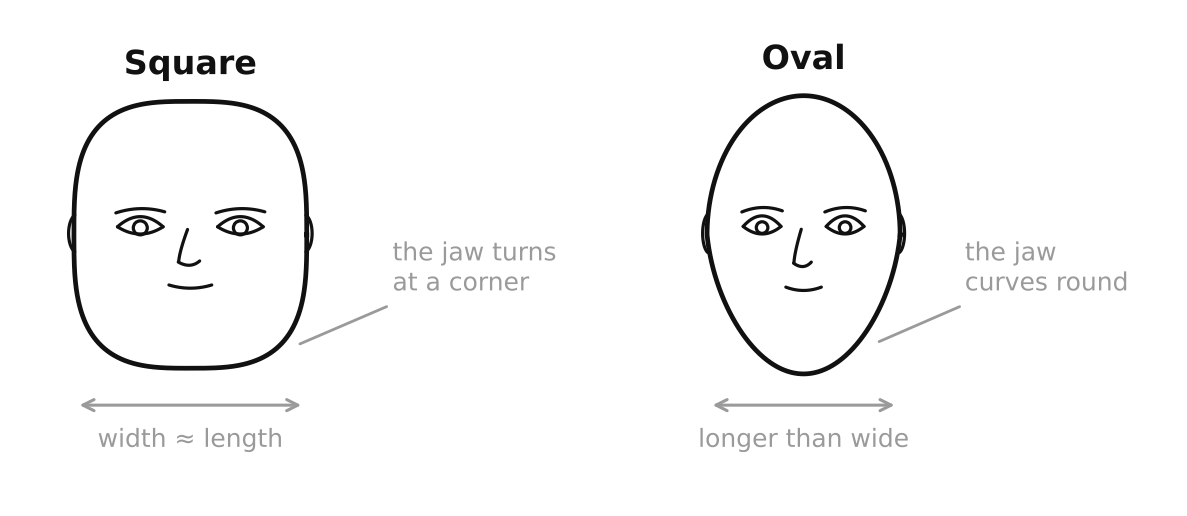
If your face is clearly longer than it is wide but the jaw still turns sharply, you are closer to a rectangular or long face. The advice then shifts towards adding width. Same jaw, different proportions, different answer.
Balance the jaw, don't hide it
Nearly every article on this subject tells you to soften or minimise a strong jaw. That is a strange way to put it. A strong jaw is usually a feature people are quite pleased with.
Balance is the more useful idea. The face already has plenty of structure. The frames do not need to add more. A curve across the middle does the whole job and leaves the jaw where it is.
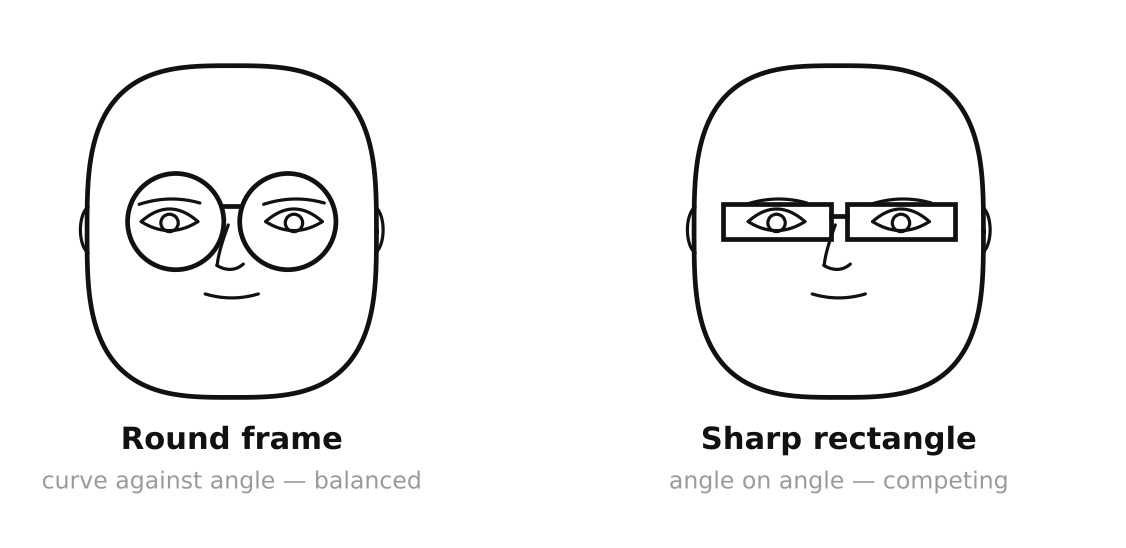
It is the round face rule turned around. A round face wants angles it does not have. A square face wants curve it does not have.
The four that work
Round
The most reliable choice on the list. A circular frame sits against the angles of the face and softens the whole thing. It does not touch the jaw at all.
Go medium to large. Small round frames get lost against a broad forehead. They can also look severe, which is the opposite of the point.
Oval
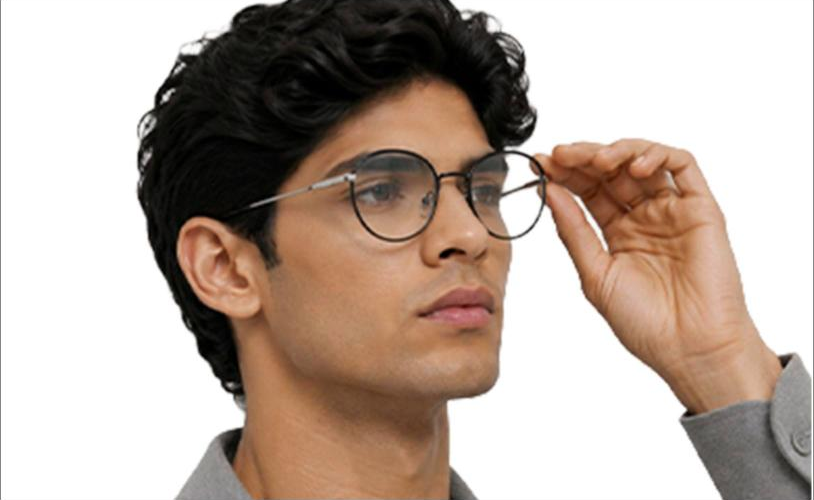
The same idea with the volume turned down. Oval frames give you the curve without making a statement about it.
Good for an office, or for anyone who would rather their glasses were not the first thing people mention.
Cat-eye
This one works for a specific reason. The upswept outer corners pull the eye up and out, away from the jaw. It is the only angular shape on this page that helps rather than hurts.
Rimless and semi-rimless
Taking the bottom rim away removes a horizontal line from the middle of your face. The frame then stops echoing the jawline underneath it.
Rimless suits a square face far better than it suits a long one. Face shape changes which styles are even available to you, more than most people realise.
The three to skip
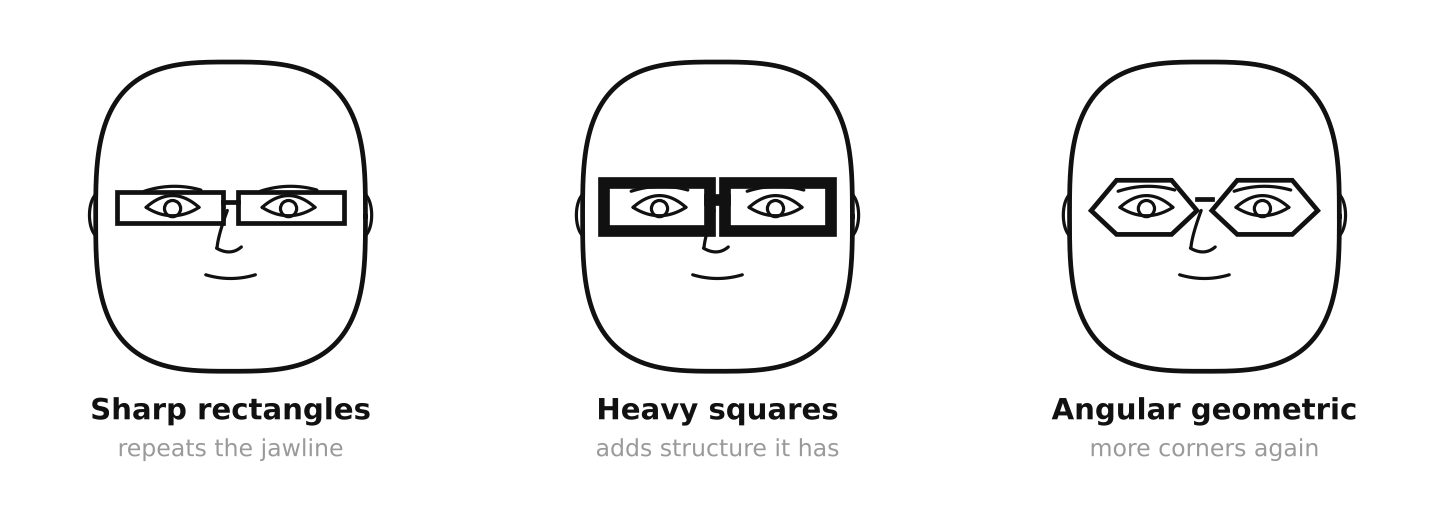
- Sharp rectangles. Straight top and bottom edges repeat the lines of the face. The frame then competes with the jaw instead of balancing it.
- Heavy square frames. Thick plastic in a square shape is the most common mistake here. It is also the most fashionable shape most seasons.
- Angular geometric styles. Hexagons and similar frames look great on an oval face. On a square one they add structure to a face that already has plenty.
These are tendencies, not laws. Some people wear heavy rectangles on a square face and carry it off. But if a frame feels slightly wrong and you cannot work out why, this is where to look first.
Two things worth checking
Where the frame sits
A frame that sits a little above the middle of your face pulls attention up towards your eyes. One that sits low does the opposite and sends it down to the jaw.
Small difference. Very easy to see once somebody tells you to look for it.
Rounded corners on a square frame
If you want a rectangular frame and nothing else will do, look for one with softened corners instead of sharp ones. It is a compromise. It works better than a compromise has any right to.
Getting the fit right
Shape is the part people research. Fit decides whether the glasses stay on your face.
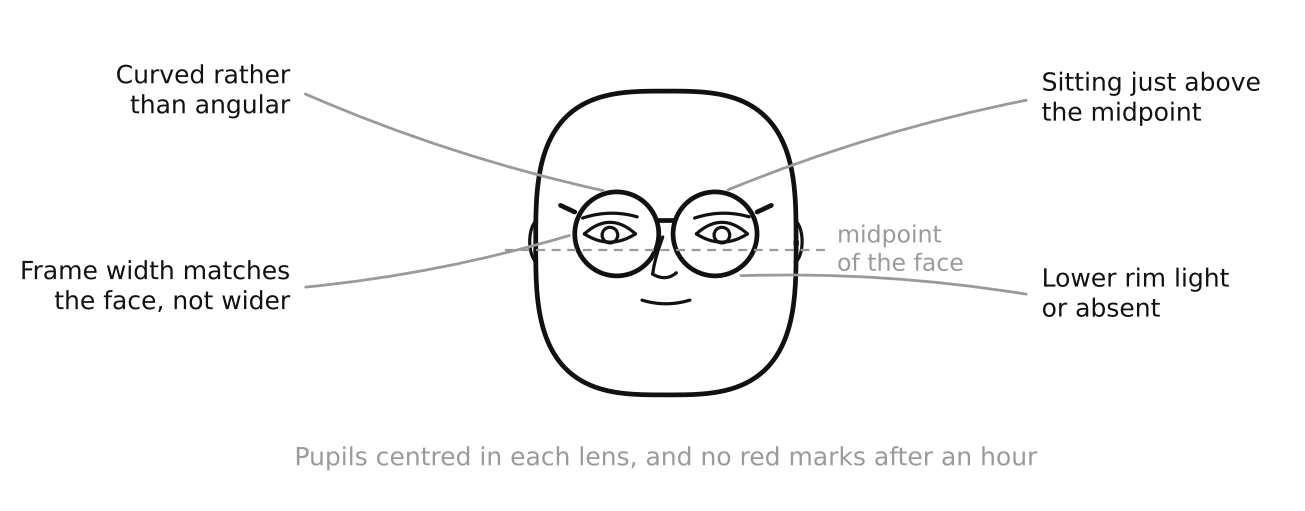
Swipe the table sideways to see every column.
| What to check | What you want with a square face |
|---|---|
| Frame shape | Curved rather than angular |
| Frame position | Sitting slightly above the middle of the face |
| Frame width | Matching your face width, not wider |
| Lower rim | Light or absent rather than heavy |
| Eye position | Your eyes centred in each lens |
| Weight | No red marks after an hour |
Any of these being wrong matters more than the shape. A pair that pinches behind the ears comes off within the hour, whatever it looked like in the mirror.
Where to get the test done
Frame shape is what everyone researches. The prescription is what decides whether the glasses get worn.
A prescription that is slightly out rarely feels like a prescription problem. It feels like tiredness after an hour of reading. Or holding your phone a bit further away than you used to. Or a pair that stops getting picked up.
Ben Franklin has optical centres inside partner eye hospitals across India. An optometrist does the test in the same building as the eye doctors, using hospital equipment. That matters for what a quick chart reading will not catch. Glaucoma gives no warning until sight has gone. Diabetes can change the back of the eye before a diagnosis has been made.
If something is found, the specialist is upstairs rather than at the end of a referral letter.
If you are buying for a woman
Cat-eye and round are the two to try first. They give very different results. Cat-eye is the bolder choice and lifts the whole face. Round is softer and more forgiving if you are not sure yet.
Oversized round works well if you want the glasses to be a feature rather than something neutral.
On colour, lighter and warmer frames sit more gently against a strong jaw than heavy black ones. Tortoiseshell, gold and softer browns all work against most Indian skin tones.
If you are buying for a man
Round frames suit men with square faces. They are worth trying even if they feel unfamiliar for the first ten seconds. The contrast is the whole reason they work.
If round is a step too far, an oval or a rectangle with rounded corners gets you most of the way there.
The one to avoid is the heavy black square. It is the default in most shops in the country. It is also the least helpful shape for this face.
Frequently Asked Questions
Which glasses suit a square face?
Round, oval, cat-eye and rimless. Curved shapes balance a strong jaw and a broad forehead. Angular frames repeat lines the face already has.
What frames should a square face avoid?
Sharp rectangles, heavy squares and angular geometric styles. All three echo the angles of the face instead of balancing them.
How do I know if I have a square face?
It is roughly as wide as it is long, with a broad forehead and a strong jaw at a similar width. The jawline turns at a sharp angle rather than curving.
Do round glasses suit a square face?
Yes, and they are usually the best choice available to you. The curve contrasts with the angles and softens the jaw without hiding it. Medium to large works better than small.
Where should glasses sit on a square face?
Slightly above the middle, so attention goes up towards your eyes rather than down to the jaw.
Try a round pair on
If you have only ever worn rectangular frames, a round pair feels wrong for about ten seconds. Then it usually stops feeling wrong.
That is the single most useful thing to try with a square face. It is also the one most people never get round to.
Ben Franklin stores sit inside partner eye hospitals across India. The eye test and the frame fitting happen in the same visit.
Optical centres inside partner eye hospitals across India. Frame fitting and a clinical eye test in one visit. Find your nearest store at benfranklin.in/store-locator
Written by the clinical team at Ben Franklin (Eyegear Optics India Private Limited), India's largest hospital-based optical chain.