
Here is the order that actually works.
Size first. A frame that is the wrong width will never sit properly, however good it looks on the shelf. Shape second, because once the width is right there are still plenty of shapes left to choose from. Material third, which is mostly about weight and how much you want to spend.
Face shape comes somewhere after all three. It matters, but it matters less than the people selling you frames tend to say.
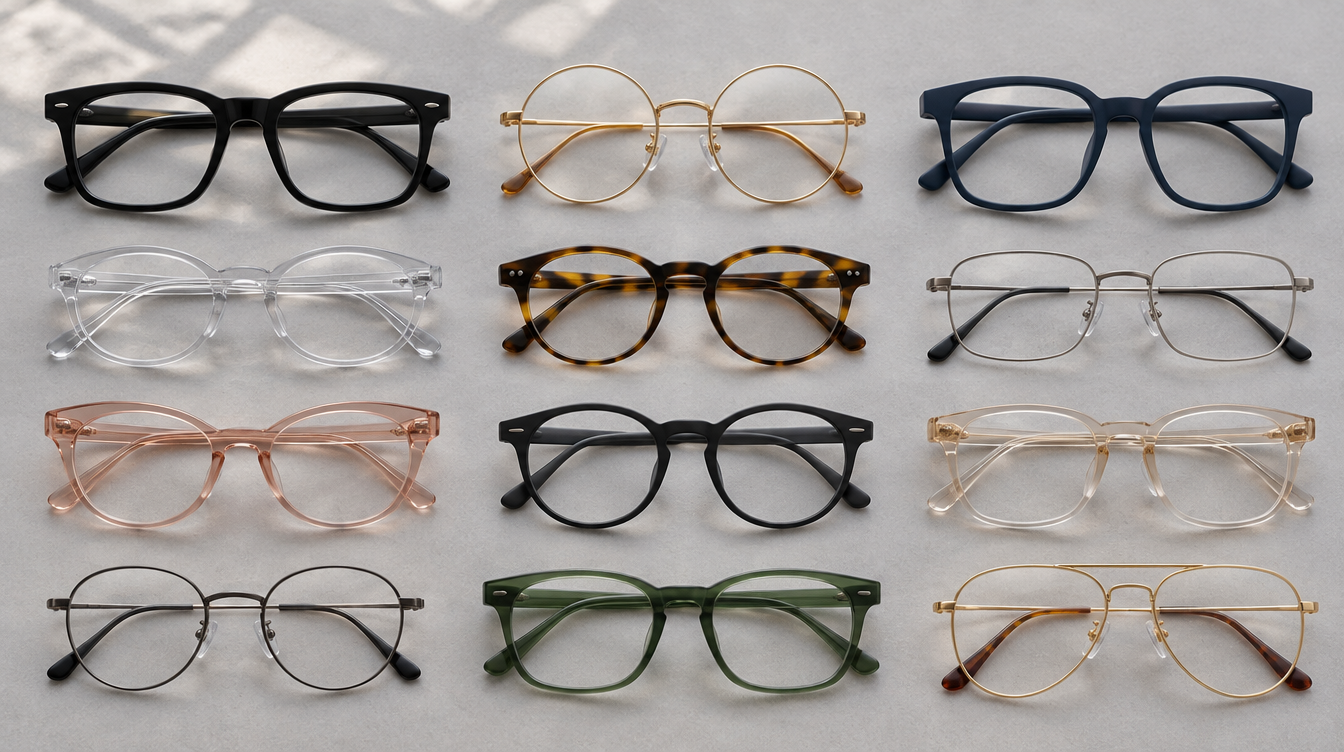
Start with the width
The single most useful number is how wide the frame is across the front. If it is wider than your face, it slides down your nose all day. If it is narrower, it pinches and leaves marks on the side of your head.
You already own the answer if you have a pair of glasses that fits. The numbers are printed on the inside of the arm, usually something like 52 □ 18 – 140. Those three numbers are lens width, bridge width and arm length, all in millimetres.
Write them down before you shop. We have a separate guide on reading them properly, including what to do if you have never had a pair that fits.
The parts worth knowing
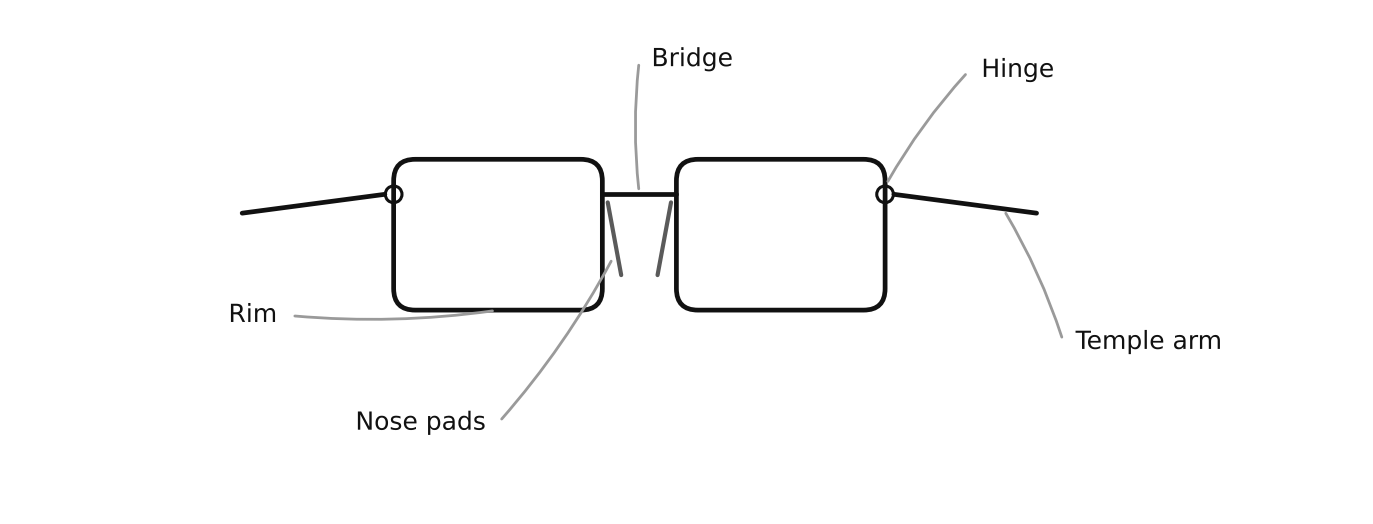
When something is uncomfortable, it is nearly always one of two parts. The bridge, which carries the weight on your nose. Or the temple arms, which should touch your head gently along their whole length and then curve down behind the ear.
Metal frames usually have separate nose pads that an optician can bend to suit you. Acetate frames have the nose pads moulded in, so the bridge has to be close to right when you buy it. This is worth knowing if you have a low or wide nose bridge, which a lot of us do.
Then pick a shape

The old rule is to pick a shape that contrasts with your face. Angular frames on a round face, softer frames on a square jaw. It is a reasonable starting point and it is not a law.
What matters more is where the top edge of the frame sits. It should run roughly along your eyebrow line, not cut across the middle of your brow and not sit so low that your eyebrows float above the frame.
If you want to work through this properly, we have a guide to finding your face shape and what tends to suit it.
Material: weight against money
Four materials cover nearly everything sold in India.
Swipe the table sideways to see every column.
| Material | What it is like | Worth knowing |
|---|---|---|
| Acetate | Plastic, thicker, holds strong colour | Can be warmed and adjusted. Heavier in large sizes. |
| Metal | Thin, light, adjustable nose pads | Bends back easily. Cheaper alloys can irritate some skin. |
| TR90 / fibre | Springy, very light, hard to snap | The usual choice for children and for sport. |
| Titanium | Lightest and strongest of the four | Costs the most. Worth it with a strong prescription. |
If you have a strong prescription, weight stops being a style question. Thick lenses are heavy, and a heavy lens in a heavy frame will leave marks on your nose by the afternoon. That is the case where paying more for titanium or a well-made metal frame earns its money.
Check these four things before you pay
- The frame front is about as wide as your face. The outer edge should meet the side of your face, not stick out past it.
- The top edge follows your eyebrow line.
- Your eyes sit roughly in the middle of each lens, not pushed to the inner edge.
- The arms sit flat against your head and the frame stays put when you look down.
What changes if your prescription is strong
Above about 4 dioptres, the frame choice starts to be decided by the lens rather than the other way round.
Smaller lenses mean thinner edges, so a big frame with a strong minus prescription will look thick at the sides whatever you pay for the lens. Rimless frames need drilling through the lens, which rules them out for some prescriptions. And if you are in progressive lenses, the lens needs enough height to fit the reading zone, so very shallow frames do not work.
This is the part a shop assistant working from a style chart will usually miss, and it is the reason it helps to buy where someone has read your prescription first.
Come and try a few on
Nothing in this article replaces putting frames on your face. Bring your current pair, or your prescription, or both.
Ben Franklin counters sit inside partner eye hospitals and clinics across India. You can have the eye test and the frame fitting in the same visit, and whoever hands you the frame has your prescription in front of them.
Optical centres inside partner eye hospitals across India. Frame fitting and a clinical eye test in one visit. Find your nearest store at benfranklin.in/store-locator
Written by the clinical team at Ben Franklin (Eyegear Optics India Private Limited), India's largest hospital-based optical chain.